Saturday, December 21, 2013

A small part of the Con Ainsworth archive i am building up, lots to come, most going into a booklet.
The boats talked about here are in Worthing Museum store and not in good condition, photos soon. click on photo to enlarge.


Tuesday, June 25, 2013


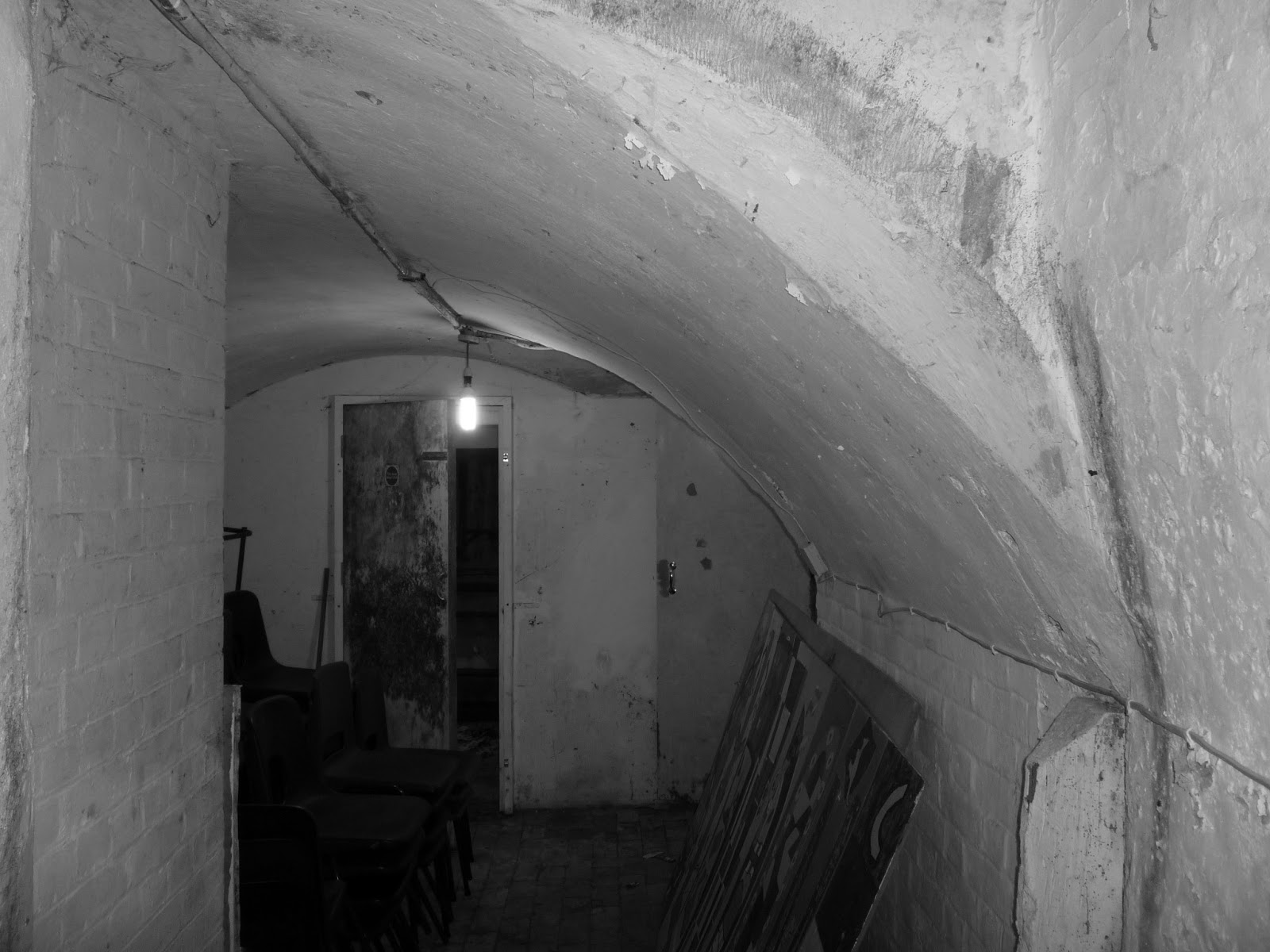
 The Cellars of Slindon House.

I am about to undertake a detailed survey of the cellars of Slindon House.

From around dates below.

 Period of Archbishop Langton.

  Date. Archbishop of Canterbury between 1207

 and his death in 1228.

There may be signs of an early period yet to be identified.

To, the present day.

So a long period of use, within the area of the cellars you can see early medieval, building work, late periods up until 1600s,.Plus to present day.

The cellars seem to be divided up  into possibly three periods, early, middle and late, late being 1700s to present day including signs of Victorian use, and Edwardian use, such as coal shoots, gas lighting, then later some WW1 signs, and later WW2 reinforcement of the cellars ceilings, plus a ammunition store room. Plus, graffiti of service men’s names. Canadian .

There another very interesting feature of a lift shaft, very ornate, completes with the workings, used to convey Lady Beaumont from the ground floor to the top floor of the present building.

Work will start next Monday and continue for the week, a resistivity survey to the south of the house will take place during this period.
This is an area which shows signs of early foundations of the early building that once stood there.


I am looking for interesting articles for our annual journal, so please put pen to paper, or should i say fingers to keyboard,

I am the Chair of the Friends of Botolphs   Church in the Adur Valley near Bramber, see link,
http://friendsofstbotolphs.wordpress.com/

This church is now in the hands of the Churches Conservation Trust.


Mick Aston is no longer with us, he inspired many, including myself, to me he was the face of Time Team, and to be honest he really inspired me to go further in my studies of Archaeology, and especially the history of Monastery's.
He will be sadly missed, and really so young, rest know. .

Wednesday, May 22, 2013

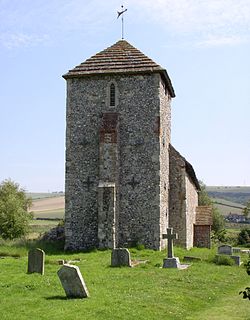
St Botolphs Church in the Adur Valley is now in the hands of the Church Conservation Trust.

At a meeting last night a formal committee started to take shape , we now have a Chairperson, Secretary, and Treasurer, somehow i ended up being the Chairperson, so still early days, but the basis of the formation of the working friends of the church is now in place.
Membership of the friends will be £10 per year for an individual and £20 for a family membership, there will be newsletters, fund raising events, lectures, music, arts etc.

More news later

Monday, May 13, 2013

Alexander Selkirk - the Real Robinson Crusoe?

Frequently history is stranger than fiction and none more so than in the tale of Alexander Selkirk: the real-life Robinson Crusoe.

Born in 1676, the seventh son of a cobbler, Alexander Selkirk grew up in Lower Largo, Fife. At the age of 19 he found himself in trouble with the Kirk Session after his brother’s trick of making him drink sea water resulted in a family fight. Before his case was heard, Selkirk fled to sea hoping to make his fortune through privateering (effectively legalized piracy on the King’s enemies) against Spanish vessels off the coast of South America.
Within a few years his skill at navigation led to his appointment as Sailing Master on the ‘Cinque Ports’, a sixteen gun, ninety ton privateer. The expedition was a disaster. The captain of the ship was a tyrant and after a few sea battles with the Spanish, Selkirk feared the ship would sink. So, in an attempt to save his own life he demanded to be put ashore on the next island they encountered. In September 1704, Selkirk was castaway on the uninhabited island of Más a Tierra (today known as Robinson Crusoe Island), over 400 miles off the West Coast of Chile. He took with him a little clothing, bedding, a musket and powder, some tools, a Bible and tobacco.

At first Selkirk simply read his Bible awaiting rescue, but it soon became apparent that the rescue wasn’t imminent. He resigned himself to a long stay and began to make island life habitable with only rats, goats and cats for company in his lonely vigil.

After several years of isolation, two ships drew into the island’s bay. Selkirk rushed to the shore, realizing a little late that they were Spanish. Their landing party fired, forcing him to flee for his life although he managed to evade capture and the Spaniards eventually departed.

Finally On 1st of February 1709, two British privateers dropped anchor offshore. Alexander lit his signal fire to alert the ships, who dispatched a rather astonished landing party to find a ‘Wildman’ dressed in goat skins. Remarkably the privateers’ pilot was William Dampier, who had led the Selkirk’s original expedition and was able to vouch for the ‘Wildman’.


Selkirk had spent four years and four months of isolation on the island, yet seemed stable when he was found. The experience had, in fact, saved his life. From William Dampier he learnt that he had been right to leave the ‘Cinque Ports’, which had sunk off the coast of Peru with all of its crew drowned except the captain and another seven men, who had survived only to be captured and left to rot in a Peruvian jail.
Selkirk re-embarked on his career as a privateer and within a year he was master of the ship that rescued him. In 1712 he returned to Scotland £800 richer, and surprised his family as they worshipped at the Kirk in Largo. They had long given him up for dead and were astonished that he was alive, let alone alive in his fine, gold and lace clothes. In 1713 he published an account of his adventures which were fictionalized six years later by Daniel Defoe in his now famous novel: ‘Robinson Crusoe’.


Selkirk, however, could never really readjust to life on the land, and, in 1720, a year after he was immortalized by Defoe, he joined the Royal Navy only to die of fever off the coast of Africa.

Wednesday, May 08, 2013

Great War In The Air - 112 Zeppelins Over England

With the anniversary of the War to end all Wars next year, i am working on aspects affecting Sussex, but thought this may be of interest. .http://youtu.be/mb6x956HTHU


Another great film. http://youtu.be/XJb-rF9k33g

Saturday, April 27, 2013

St Botolphs Church in the Adur Valley is now in the hands of the Church Conservation Trust, the church will be closed later in the year for major restoration work, so now would be a good time to visit this ancient church.
Adjacent to the church on the site of the now modern burial ground ,where once stood the medieval village of Botolphs,the site is still littered with medieval pottery etc.Opposite the church in the fields you can still see the remains of the medieval salt industry,salt mounds are still visible. At a later date i will be undertaking tours of the church and surroundings area associated with the village and church.
Meanwhile do visit this summer, it is open every day from early till late.

The Grade I listed Saxon church of St Botolph's at Botolphs, West Sussex, England, is situated in the valley of the River Adur and is now part of the Church of England parish of Beeding and Bramber with Botolphs. An earlier dedication to St Peter de Vetere Ponte (St Peter of the Old Bridge) is now lost, like the bridge over the Adur from which it took this ancient name. The church serves the mostly depopulated hamlet of Botolphs in the Horsham district of West Sussex. The church has fragments of medieval wall paintings. Architectural historian Ian Nairn comments that the Jacobean pulpit is "notable in a county which is poor in 17th century fittings".

Wednesday, April 17, 2013

Exciting finds in Slindon House.

A visit to the cellars has unearthed some early Medieval building work, dated to circa 1200s.Vaulting , medieval floor tiles, possible very early chapel.

Slindon was a important deer park at this time, and on the list of, circa 12 Summer residency's of the Archbishops of Canterbury.


It was an occasional residence of Stephen Langton, who died here in 1228, and Archbishop John Pecham spent much time here, holding ordinations in the chapel in 1288 and 1291.

  Archbishop Chicheley confirmed the election of Thomas Ludlowe as Abbot of Battle in 1421 in the chapel.

Now this shows us this was a high statues building, as we can see from the remains.
Lots more to show, this just a taster.    Double click photos to enlarge.


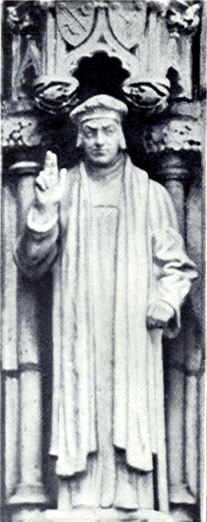
Stephen Langton

Stephen Langton,  (died July 9, 1228, Slindon, Sussex, Eng.), English cardinal whose appointment as archbishop of Canterbury precipitated King John’s quarrel with Pope Innocent III and played an important part in the Magna Carta crisis.
Langton, son of a lord of a manor in Lincolnshire, became early in his career a prebendary of York. He then (c. 1181) went to Paris and, having graduated from that university, he served there for 25 years and established a reputation as a great preacher and a major scholar and theologian. Pope Innocent III then summoned him to Rome and in 1206 created him cardinal-priest of St. Chrysogonus. Immediately afterward Langton was drawn into the vortex of English politics.
After the death of Hubert Walter (1205), a dispute immediately arose as to who should be the new archbishop of Canterbury; but after two years of political turmoil involving king and clergy, the Pope suggested that the suffragans of Canterbury elect Langton, who was consecrated at Viterbo on June 17, 1207. King John, however, refused to allow the new archbishop access to his province, seized the revenues of Canterbury, and banished the monks; Innocent replied by laying England under an interdict (March 1208). Langton crossed to Dover (October 1209) in an attempt to achieve negotiation with the king, but John would go no nearer than Chilham, Kent, and after a week the archbishop left the country, and John’s excommunication was published (November 1209).
By 1212 John was seriously planning the recovery of the French territories lost to Philip II in 1204. The need to embark on this enterprise unhampered by ecclesiastical censure, Innocent’s threat of deposing him, and the news that Philip was planning (April 1213) an invasion of England finally caused John to submit. He at once agreed to receive the archbishop, and Langton, who had been residing mainly at the Cistercian abbey of Pontigny, crossed to England (July 1213) and absolved the king.
Langton was not only associated with the baronial opposition against King John; he advised and supported it, suggesting that the barons take their stand on the coronation oath and the charter of Henry I. Later he withdrew, disapproving violent means, and at Runnymede (June 1215) appeared as one of the king’s commissioners. He therefore probably influenced such “non baronial” clauses of Magna Carta as the one confirming ecclesiastical liberties. During 1218–28 he supported Henry III’s party, being responsible for the 1225 reissue of Magna Carta, and that year convened a clerics’ council to determine a grant to the king. He was responsible for the recall of the papal legate, and during his life no other one resided in England, thus strengthening the archbishop of Canterbury’s claim to be legatus natus (a legate in his own right). In 1222 he also promulgated some important constitutions.


Peckham, John (C. 1225–1292)

John Peckham, or Peckham, the English philosopher and theologian, and defender of Augustinian doctrines, was born in Patcham, near Brighton, Sussex. Educated at the monastery at Lewes, he continued his studies at Oxford and Paris, and sometime during the 1250s he joined the Franciscan friars at Oxford. Subsequently he became a master of theology in Paris in 1269 and returned to Oxford in 1272. Peckham was provincial of the English Franciscans from 1275 to 1277 and then lectured at the papal court for two years. In 1279 he was appointed archbishop of Canterbury and held this office until his death.

Friday, October 12, 2012

Slindon Estate.

As many of you will know, the Slindon Estate has many archaeological areas of interest,  a very long history, going all the way back to Stone Age Man , and beyond.

There is much work to be undertaken on the estate, recording of buildings, ancient trackways, covered ways, burial mounds , plus the recording of a lot of WW1, and WW2 activity's, including a Airship Station

More details will be available very soon, so watch this space, non members.who are interested, please contact me, by leaving a comment..

Thursday, July 19, 2012

Sompting

Interesting Sompting.
A Bronze Cauldron from Sompting, Sussex


                E. Cecil Curwen (1948).


The Antiquaries Journal, Volume 28,
Issue 3-4, October 1948 pp 157-163

http://journals.cambridge.org/action/displayAbstract?aid=7830450

Monday, August 02, 2010

Some rare photos in the woods at Slindon 1890s,

Charcoal burning, history, click link.These are rare photos of times past on the estate, i have now some 500 i hope at some point to show on a dedicated site, there are some copyright issues first to address.

Friday, July 16, 2010

Wartime on the Slindon Estate.

1st and 2nd World War at Slindon


First World War

During the First World War, Slindon House was used as an auxiliary hospital run by Lady Beaumont, the sister of Wooton Issacson.

A prisoner-of-war camp, guarded by Canadian troops, was established between the bottom of Nore Hill and West Gumber Gate (SU 9623 1175). The prisoners were used to clear trees from the area and the remains of the incinerator that served the camp is still visible.

Second World War

During the Second World War the house was again utilised as a hospital before being taken over for used by the army stationing troops who were later to take part in the Dieppe raid.

Tree felling also took place on quite a large scale with large beech trees being taken from Nore Wood from an area around the back of the folly: Previously unfarmed land was reclaimed and brought back into production this consisted principally of the area of cleared land next to where the First World War prisoner-of-war camp had been located, which had become covered in gorse and scrub. Even today these fields are still referred to as War Ag 1-4.

Apart from the troops billeted in Slindon House just before the Dieppe raid there were no other military camps on the estate for the duration of the war except for the build up to D-Day, where some were temporarily camped in the Park.

There was however, a dummy airfield constructed on the Gumber as a decoy from RAF Tangmere, which was sited nearby. The raid shelters built at the same time as the dummy airfield are still in existence.

List of Sites

Slindon Estate Base Camp

One of the wooden sheds is supposed to have been part of the First World War PoW camp and was purchased in an auction after 1918. Need to research and understand which building is being referred to and then survey in detail.

Also, located in the stable yard is a iron trolley, which is supposed to have formed part of the light railway installed on the estate to transport wood. Again this needs to be found, given a clean up, photographed and recorded.

Air Raid Shelter, Slindon Park

Located near the Ice House in Slindon Park was an Air Raid shelter. Need to visit to see if building is still in-situ and record accordingly. An AA battery may also have been located in this vicinity.

POW Camp, Nore Hill

Only known remain is the incinerator. This has been photographed, but needs revisiting and recording properly. Also, need to see what other evidence still remains on the ground for the PoW Camp i.e. concrete footings for buildings.

Airship Mooring Site, Northwood Cottages

Although not mentioned in the Whitfield report, there is photographic evidence of a First World War airship-mooring site somewhere close to the Northwood Cottages.

The areas to be investigated are the woods to the South and West of the cottages. The photos show a series of huts, so any remaining evidence will either be the concrete moorings for the airships (or observation balloons) or concrete foundations for the huts (the staff were housed under canvas).

This a brief report, more to be listed.

Thursday, July 01, 2010

A Hamlet, or a Village.

Photo.  Downend, a hamlet in the Cotswolds .

          hamlet is usually a rural settlement which is too small to be considered a village, though sometimes the word is used for a different sort of community. The name comes from Anglo-Norman hamelet(t)eOld French hamelet, the diminutive of Old French hamel. Another diminutive of Old French ham is possibly a cognate with similar words of Germanic origin. Compare with Dutch heemGerman HeimSwiss German cham or -kon, Old English hām and Modern English home, all derived from the Proto-Germanic *kham. 
Historically, when a hamlet became large enough to justify building a church, it was then classified as a village. One example of a hamlet is a small cluster of houses surrounding a mill.

In the United Kingdom, the word 'hamlet' has no defined legal meaning, although hamlets are recognised as part of land use planning policies and administration. A hamlet is traditionally defined ecclesiastically as a village or settlement that usually does not have its own church, belonging to a parish of another village or town. In modern usage it generally refers to a secondary settlement in a civil parish, after the main settlement (if any). Hamlets may have been formed around a single source of economic activity such as a farm, mill, mine or harbour that employed its working population. Some hamlets, particularly those that have a medieval church, may be the result of the depopulation of a village.
The term hamlet was used in some parts of the country for a geographical subdivision of a parish (which might or might not contain a settlement). Elsewhere, these subdivisions were called "townships" or "tithings".
In Scotland the term of Gaelic derivation, clachan, is often preferred to the term "hamlet".
In Northern Ireland the common Irish place name element baile is sometimes considered equivalent to the term "hamlet" in English, although baile would actually have referred to what is known in English today as a townland -- a geographical locality, not a small village.

Wednesday, April 29, 2009


Alexander Selkirk - the Real Robinson Crusoe?

Frequently history is stranger than fiction and none more so than in the tale of Alexander Selkirk: the real-life Robinson Crusoe.

Born in 1676, the seventh son of a cobbler, Alexander Selkirk grew up in Lower Largo, Fife. At the age of 19 he found himself in trouble with the Kirk Session after his brother’s trick of making him drink sea water resulted in a family fight. Before his case was heard, Selkirk fled to sea hoping to make his fortune through privateering (effectively legalized piracy on the King’s enemies) against Spanish vessels off the coast of South America.
Within a few years his skill at navigation led to his appointment as Sailing Master on the ‘Cinque Ports’, a sixteen gun, ninety ton privateer. The expedition was a disaster. The captain of the ship was a tyrant and after a few sea battles with the Spanish, Selkirk feared the ship would sink. So, in an attempt to save his own life he demanded to be put ashore on the next island they encountered. In September 1704, Selkirk was castaway on the uninhabited island of Más a Tierra (today known as Robinson Crusoe Island), over 400 miles off the West Coast of Chile. He took with him a little clothing, bedding, a musket and powder, some tools, a Bible and tobacco.

At first Selkirk simply read his Bible awaiting rescue, but it soon became apparent that the rescue wasn’t imminent. He resigned himself to a long stay and began to make island life habitable with only rats, goats and cats for company in his lonely vigil.

After several years of isolation, two ships drew into the island’s bay. Selkirk rushed to the shore, realizing a little late that they were Spanish. Their landing party fired, forcing him to flee for his life although he managed to evade capture and the Spaniards eventually departed.

Finally On 1st of February 1709, two British privateers dropped anchor offshore. Alexander lit his signal fire to alert the ships, who dispatched a rather astonished landing party to find a ‘Wildman’ dressed in goat skins. Remarkably the privateers’ pilot was William Dampier, who had led the Selkirk’s original expedition and was able to vouch for the ‘Wildman’.


Selkirk had spent four years and four months of isolation on the island, yet seemed stable when he was found. The experience had, in fact, saved his life. From William Dampier he learnt that he had been right to leave the ‘Cinque Ports’, which had sunk off the coast of Peru with all of its crew drowned except the captain and another seven men, who had survived only to be captured and left to rot in a Peruvian jail.
Selkirk re-embarked on his career as a privateer and within a year he was master of the ship that rescued him. In 1712 he returned to Scotland £800 richer, and surprised his family as they worshipped at the Kirk in Largo. They had long given him up for dead and were astonished that he was alive, let alone alive in his fine, gold and lace clothes. In 1713 he published an account of his adventures which were fictionalized six years later by Daniel Defoe in his now famous novel: ‘Robinson Crusoe’.


Selkirk, however, could never really readjust to life on the land, and, in 1720, a year after he was immortalized by Defoe, he joined the Royal Navy only to die of fever off the coast of Africa.

Sunday, November 30, 2008

A Glutton for Punishment

A Glutton for Punishment

A former resident of Binsted, one Isaac Rawlins, was found guilty of crimes which would hardly warrant a mention in the Neighbourhood Watch News today. It was at a time during the early nineteenth century when, following the Napoleonic wars and the return of ‘demobbed’ soldiers and sailors, employment in agriculture had slumped because of the rise of imported food with a devastating effect on the population of the countryside many of whom were desperate, and rioting and civil disobedience worried the aristocracy and harsh measures were adopted to rid the country of undesirables and co-incidentally colonise partially-mapped Australia before the French could do so.

We do not know if Isaac Rawlins or his family were starving. He was born in Slindon in 1785 and appears to have married there although his indictments clearly state that he came from Binsted. He was probably a woodman and if he was working in woods at Binsted he might well have lived there in a ‘bivvie’ (short for bivouac) of hazel sticks with bracken cover. There was no affordable transport to work and this practice was still used up to the 1950s. It was essential for instance for charcoal burners to live by their ‘pits’ to damp down if the pile burst into flames in order to avoid finishing up with a pile of ash instead of charcoal. We know he was 5’8’’ tall, of stout build with hazel eyes and a long face.

His first crime was the theft of a grub-axe (mattock) value 1 shilling in 1819.

His first 7 year transportation sentence at Petworth quarter sessions was in 1822 for stealing 11 gallons of wheat worth 5 shillings belonging to Francis Newland the Younger witnessed by Newland and Joseph Apps. Seven years were enough for most convicts and few risked the return journey and made a life in Australia but our ‘hero’ felt the urge to come back to England and is listed as crew (type ‘C’ for convict) on the Newcastle in 1823.

How he managed this is a mystery – possibly a pardon - but his bitter experience did not prove a deterrent because he was seen, in November 1833, taking away ‘one foot of timber value 9d’ in Rewell or Binsted Woods by Charles Sherwin who was wood-reeve for the Countess of Newburgh and lived in the cottage north of the A27 opposite the end of Binsted Lane (recently converted to a large house.) He also took a similar amount belonging to the Howard family. He was tried at Petworth on 30th December 1833 and in spite of his plea

“I did not cut the timber off. I hope you will give me my punishment in Petworth gentlemen, if you please.”

he was sentenced to another seven years transportation and, at the age of 48 in those days would have been quite an old man with little hope of return. He spent a 132 day journey on ‘The Surrey 1’ with 260 other convicts during which, unusually, no-one died unlike a previous, notorious voyage of this ship when 56 died from typhus including the captain and both mates. The prospect of 3 weeks stay in Rio in spring, which the convicts experienced, sounds tempting today but not when chained up below decks in foul conditions.

Having spent his 7 years working hard in a form of bondage he received his ‘ticket of leave’ - a kind of probation – in October 1841 aged 56 whereby he could work for himself but must remain in the colony and we can only guess how he survived. I could find no record of his death.

John Heathcote

Wednesday, November 26, 2008

Mass Dials.


Disappearing :Mass Dials on Sussex Churches


Mass dials have long been a feature on Sussex churches, usually found on south-facing wall of the church, often near the south doorway, and usually about a meter and half above the ground levels.
However, sometimes they are found in other places on the fabric of the church, for over periods of time they have been moved during rebuilding work; so do not always assume that where they are now, is where they have always been positioned.
About 8 or 9 inches across and rather roughly cut, mass dials come in a wide variety of designs, from semi-circles of dots to complete circles with associated radii. Their chronology is difficult to determine but simple versions with only four or five lines are early whilst those with numbers round the edge (rare) are late.
The gnomon, invariably missing, pointed straight out horizontally and so the dial would not record the same hours at all times of the year. The mass dial is usually regarded as an event marker for the church services rather than a timepiece .
It is thought that the earliest mass dials may be a simple carving of four or five lines from the gnomon hole, possibly with circle or arc later. Ashton-under-Hill, Worcsand Wootton, Kent is typical early examples. The Ashton-under-Hill stone also includes an example of 'four holes in a row'; the row of dots would originally have been horizontal with the gnomon stuck into a mortar line above.
There are many examples throughout Sussex to be found, except that today that may not be so easy, the reason for this is that over the passage of time, and air pollution in many areas, the dials have almost disappeared. A good example of this is at Edburton church, this little church is located in the hamlet of Edburton on the road between Fulking and Small Dole, virtually opposite the World Famous Springs Smoked Salmon shop..
The dials are on the south porch of the church, there are two in this location and another on the North side of the church, this is a curious one, for one must assume that it is not in its original position, and therefore in much better condition.
The dials on the south porch are in now poor condition, I remember seeing them for the first time some twenty years ago, and at that time were in good condition, now they are not. What has happened is that the stone has started to flake away, therefore taking with it layers of the original carving into the stone of the dial, if this process carries on, in a very few years time they will all but disappear completely.
The question is can they be saved for future generations to marvel at and appreciate; it will be difficult to stop the deterioration, one solution is to treat the areas with a polycarbonate solution, in effect give them a light plastic covering, which can breath.
It is important that mass dials are saved from further erosion, they are an important part of the history of the church and the Christian faith.

Wednesday, September 24, 2008

Shoreham Castle.

Shoreham Castle.

A Motte or castle perhaps existed in Shoreham, a interesting map of the area published by J.Edwards in 1789, does show a mound on the north side of the town, it is in the angle where the present Mill Lane and Southdown road meet; it is possible that this was the remains of an earth motte, which was built in that position to guard the approaches to the town.
Today there are no remains of this mound to be seen, but it is interesting that this position was at the junction of the road from Steyning, Shoreham and Steyning would have that time been major trading towns, Shoreham a port with goods coming in and out, and Steyning being a major market town, with a long history of trading, and not forgetting that the River Adur once flowered much closer into the town of Steyning, there being a port and a Mint there.
The site in Southdown Road was excavated in the 1970s, this being possible due to the building of a garage in the garden of no 42 Southdown Road, the excavation did revel a flat bottomed ditch, this ditch is shown of the map by Edwards, it was not possible to excavate to any extent, but a well was discovered on the site, it was difficult to excavated it fully, but material removed from it included Samian dated to the late 1st /early 2nd century, there were also some sherds of course ware, other material was dated to the 4th century.
The ditch itself had a few finds within the layers, two sherds of pottery; these was dated to the 14th century, but over all the finds were thin on the ground.
It is interesting to note the construction of the well is dated to around 1st/2nd century, this is important as it is our first indication of a Roman building in the area, especially as there were a few finds of tessera found.
The ditch is difficult to understand as it was not very deep, and dug into quite soft clay, depth approximately 1.1m deep, if you look at the size of the ditch and its depth, it would only produced a mound in the region of 2m high, the ditch is dated to the 14th century, and therefore it is not so likely that this was the site of an early Motte.

In conclusion, was this site of the Motte in Shoreham, is it a site that now because of the buildings that now cover the area, it difficult to understand.
The area is an ideal spot for a defensive structure, but the evidence is on the ground not that strong, but this does not mean that we should dismiss it, perhaps the real Motte or even a larger castle did exist somewhere in the area, and through time and research we may learn more about the Castle of Shoreham..


Rodney Gunner. 2008

Parham.

The history of Parham landscape during the later Middle Ages, is very sketchy, there seems to be little in the written resources to consult at the present time.

The principle buildings where at this time the two house of the Westminster and the Tregoz estates, they were thought to be on more than about 200 meters apart., and centred on the present-day church and manor house. In 1365-7 the Westminster Abbey buildings were said to comprise a thatched hall, with a chamber and kitchens: it is possible that these were the present east wing of the present Parham house, but a resent survey of this part of the building may conclude that is not the case, further work has yet to be undertaken.

The SMR records record the site of a deserted settlement immediately south east of the church, is stated that there were buildings there as late as 1778-9, and earthworks were present in 1873.

A geophysical survey undertaken in 1969 identified possible structures, a pit was dug, and thirteenth century pottery/fourteenth was excavated.

As in most locations early manor houses were usually very near churches, and often abandoned or converted to other uses as the owner ship of the estates changed hands.

It is very possible that the platform was the site of the Tregoz manorial centre and that the deserted settlement was a collection of later cottages.

There would have been other buildings associated with both the Westminster grange, and the Tregoz estate, the location of theses is not known.

The evidence for the removal of the village because hygiene (stated in documents of the period) is not convincing, the removal of the inhabitants’ to Rackam less so, as there is no evidence to date that a village was established there, except that a mill has stood in Rackham for a great many years (Rackham mill).There was a chapel there, but according to maps of the period, this was a ruin by 1724.

It is certain that the village was removed so that the estate could be imparked, the same applied at the estate at Wiston.

At this point in the history of the estate and the village, it worth looking at the state of villages before enclosure, and after enclosure, and what it meant for the families living in the village, and there employment and livelihood.

Tuesday, February 05, 2008

Sun Dials.

Shepherds Sun-dials of the South Downs.

About twenty years ago I spent a few days at Burpham, on the South Downs, not far from Arundel.

One of the interesting things I noticed was that some of the old time shepherds actually constructed sun-dials in the turf.

They had learned to do this in the old days before watches were cheap.

This is how it was done.—Having selected a fairly smooth bit of turf, the shepherd marks a rough circle about 18 inches in diameter, with a pointed stick, leaving the stick perpendicularly in the ground in the centre.

Due south of this he fixes another stick, about twelve inches long, on the periphery of the circle.

The various land marks, and their bearings, are so well known to shepherds, that they need no compass; and as a matter of fact, nearly every shepherd can tell the approximate time without any watch or dial and even on dull day.

Having fixed the South stick, he places another due West, and still another due East, so that we get a sundial with gnomons on the edge of a circle instead of being centre.

As the uses of this form of dial are connected with the tending sheep, it follows that its use is not required at all late, for the collecting and folding for the night of a large flock of sheep, naturally takes time.

Author unknown, document dated, 1890s.

Thursday, December 27, 2007

Young Lovers.


It could be humanity's oldest story of doomed love.

Archaeologists have unearthed two skeletons from the Neolithic period locked in a tender embrace and buried outside Mantua, just 40 kilometres south of Verona, the romantic city where Shakespeare set the star-crossed tale of Romeo and Juliet.

Buried between 5000 and 6000 years ago, the prehistoric lovers are believed to have been a man and a woman and are thought to have died young, as their teeth were found intact, Elena Menotti, the archaeologist who led the dig, said.

"As far as we know, it's unique," Menotti said. "Double burials from the Neolithic are unheard of, and these are even hugging."

The burial site was located on Monday during construction work for a factory building in the outskirts of Mantua.

Alongside the couple, archaeologists found flint tools, including arrowheads and a knife.

Experts will now study the artefacts and the skeletons to determine the burial site's age and how old the two were when they died, she said.

From the Sydney Morning Herald

Thursday, December 06, 2007

Parham village.


Parham estate.

Early this year the Parham estate contacted us with a proposal to undertake the research and an excavation of the lost village of Parham, I think it’s important to understand what a lost village is, and an understanding of what it may have been like for the inhabitants during the period of occupation.

Firstly what is a deserted medieval village, the term used to describe such a place is a DVM, this term is really misleading, as not all deserted villages date from the medieval times, many such settlements were only finally abandon as late as 1950s, while many others have been deserted since the 5th or so century.

One of the most famous medieval villages to be researched and excavated is Wharram Percy in Yorkshire; this site has been a focus of extensive archaeological investigations that has spanned over forty years. Only the church is clearly visible above the ground, although the surrounding landscape clearly shows the layout of the original village.

A deserted medieval village or DMV is really a ghost settlement, an abandoned location where partially erected houses and crop remains but the inhabitants have long moved on to other places.

In England there are some 3.500 DMVs, and that is at the last count, in Sussex alone there are around 115, but this is not set in stone as there will many others that to date, have not been recorded - discovered to date.

Throughout the medieval period, villages consisted of from 10- 60 families, mainly living in very rough huts-at best; wooden-framed with wattle and daub walls-on dirt floors, with no chimneys or glazes windows. The furnishings would have been sparse, beds on floors softened with straw of leaves.


Water would have come from a local river or stream, often also the main sewer from the village, sometimes they may have been a well, water would have been collected in wooden buckets.

In most cases one end of the hut would be given over to livestock, which would have been kept in the hut over night, this in the cold periods of winter would have given extra warmth to the family living in the hut, but during hot periods it would have very smelly, and very unhygienic.

Clothes made of wool, flax and animal skins were rarely changed. Only the elite, the lord of the manor, the priest the Lords steward and perhaps some of the wealthier peasants, enjoyed superior housing and clothes.

The diet at this time would have been poor, mainly porridge, cheese, black bread, and some home grown vegetables, a lot of the food would have been dried and smoked, and this food would carry them throughout the winter months.

Village lives revolved around the agriculture calendar.

In the spring the animals grazed in the pasture, and seed sown. Summer was the busiest time; particularly when the harvests of wheat, barley, rye, hay, vegetables and fruit were being gathered.

In the autumn the animals grazed on the remains of the crops, providing manure for the fields, and it is at this time other types of marling were applied.

Winter was the time when families and those animals not killed for meat stayed indoors.a

There are several arrangements for the village as we know it, a village in the round, IE around a church, the village arranged along street, and a village around a square, as in Wisbrough Green, what we have at PARHAM is a village perhaps around a church, or a village arranged along a street.
The village arranged around a church is often there from much early times, especially if the church is on a mound, as this then denotes the period of occupation perhaps to Pagan times.

A village along a street often goes back to Roman times, when settlements grew up along well known trading route. Or even an ancient track way, another trading route, perhaps where travelers stopped over night. Many of the roadside settlements of Roman Britain were abandoned in the troubled times of the Saxon Conquest, but when ever possible during settled periods ,villages sprang up again at crossroads, at river crossings, and wherever somebody thought he had something to gain from passing traffic.

So what do we have at Parham, I think it’s a village along a street, an old road or track way, the church is dated to around to around the early 12th century.